Indoor vs. Outdoor Furniture: What’s the Actual Difference in Materials and Durability?
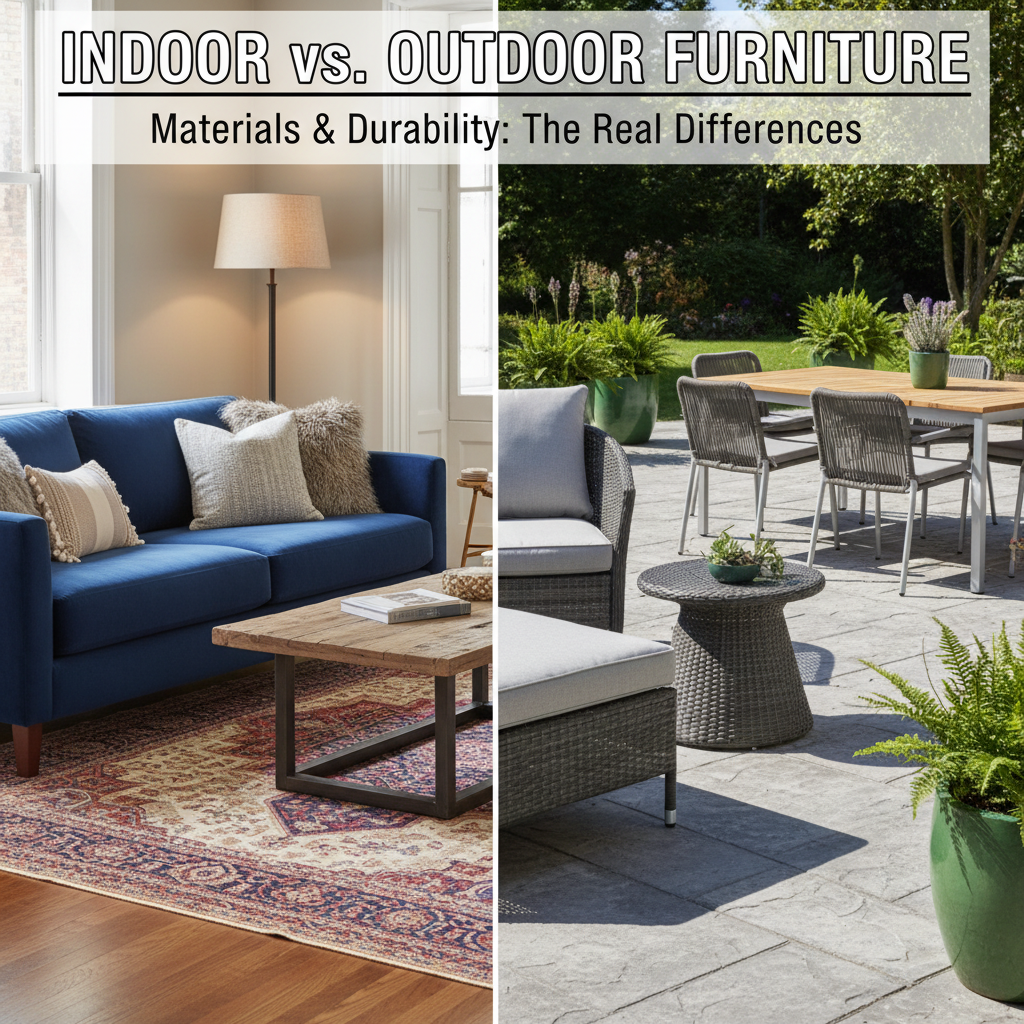
The primary difference between indoor and outdoor furniture materials centers on weather resistance, with outdoor furniture constructed from UV-resistant, moisture-resistant, and rust-proof materials like powder-coated aluminum, synthetic rattan, and solution-dyed acrylic fabrics, whereas indoor furniture uses natural wood, standard upholstery, and non-treated metal frames designed for controlled environments. Outdoor furniture typically lasts 5-15 years with proper maintenance, compared to 10-20+ years for indoor furniture, with the lifespan difference primarily attributed to environmental exposure and material quality.
What Makes Outdoor Furniture Materials Different from Indoor Furniture Materials?
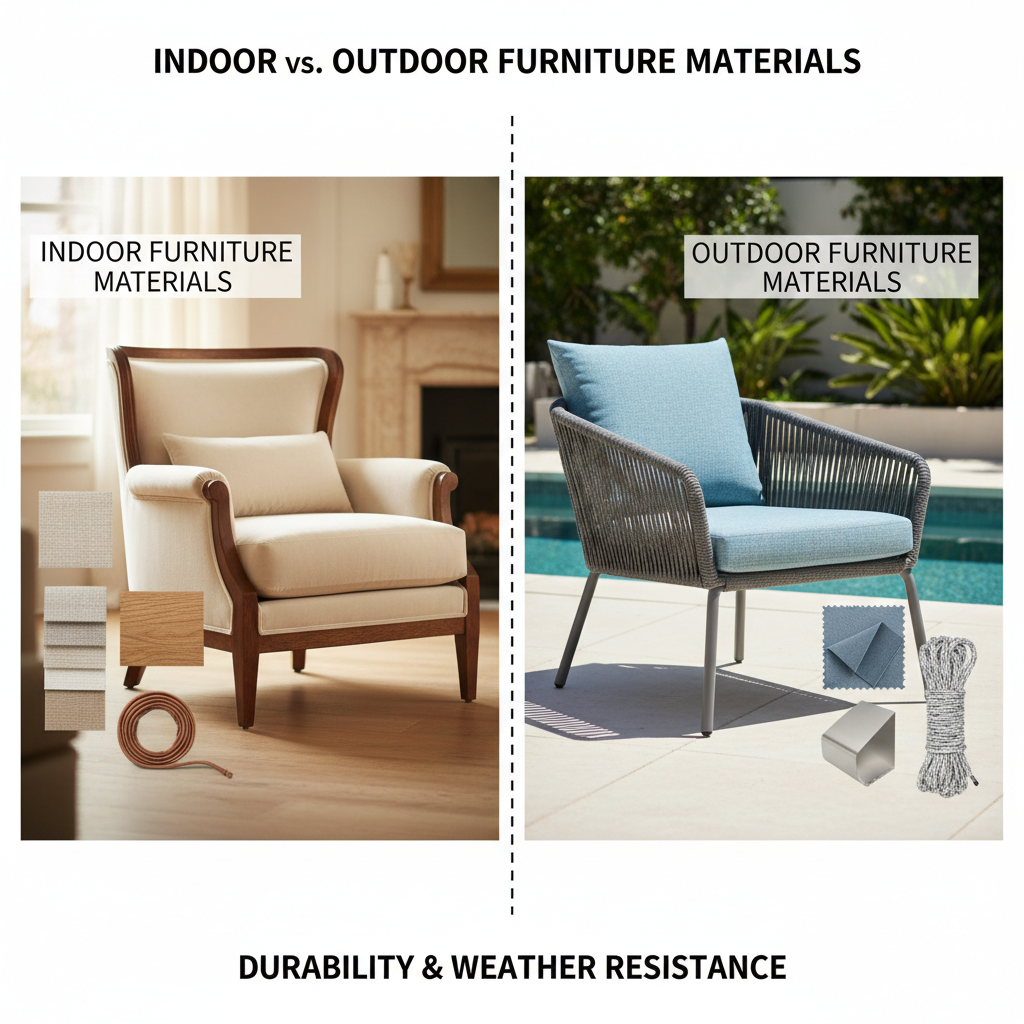
Outdoor furniture materials undergo specialized treatments and manufacturing processes designed to withstand environmental exposure. According to industry standards established in 2024, weather-resistant materials must pass specific performance tests for UV protection, moisture protection, and temperature resistance. Marine-grade materials represent the highest quality tier, featuring enhanced protection against salt spray, humidity, and extreme weather conditions.
Teak wood, aluminum, and synthetic wicker dominate the outdoor furniture market because these materials demonstrate superior fade resistance and structural stability. Teak contains natural oils that provide inherent water repellent properties, while powder coating on aluminum frames creates a protective barrier against rust formation and corrosion. All-weather wicker, manufactured from HDPE (high-density polyethylene) or resin wicker, resists mold growth and maintains color retention even after years of sun exposure.
Indoor furniture materials prioritize aesthetic appeal and comfort over weather resistance. Natural wood species like oak, maple, and walnut feature prominently in indoor furniture construction, while upholstery fabrics include cotton, linen, and standard polyester. These materials lack the protective finishes and weatherproof coatings required for outdoor use, making them vulnerable to moisture damage, sun fading, and rapid deterioration when exposed to outdoor conditions.
Outdoor vs Indoor Furniture Material Comparison: Which Materials Are Best?
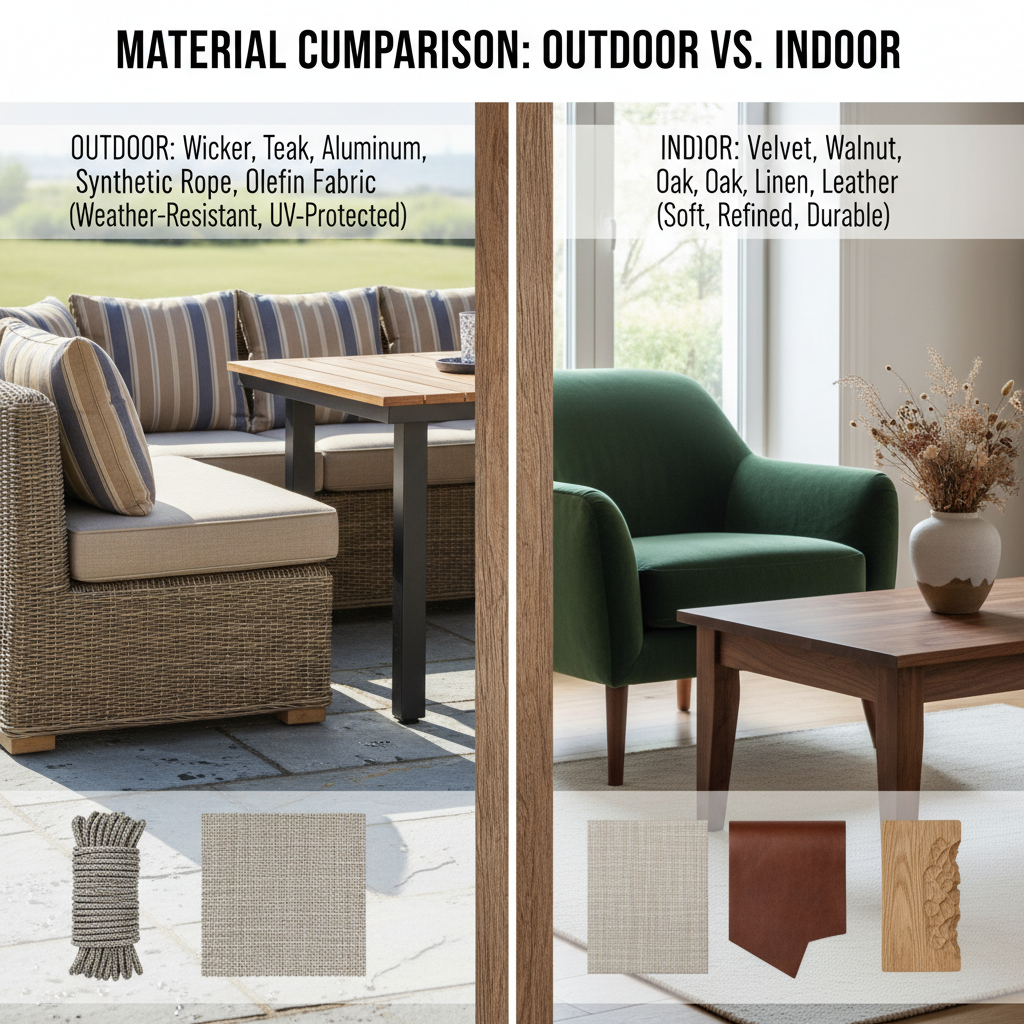
| Material Category | Outdoor Furniture Options | Indoor Furniture Options |
|---|---|---|
| Wood Materials | Teak wood, eucalyptus wood, acacia wood, cedar wood, pressure-treated wood, composite materials, polywood, recycled plastic lumber | Natural wood (oak, maple, walnut), softwood, hardwood, veneer, laminate, untreated tropical hardwood |
| Metal Frame Materials | Powder-coated aluminum, cast aluminum, wrought iron (treated), galvanized steel, stainless steel, marine-grade stainless steel | Steel frames, chrome plating, painted metal, untreated iron, brass, copper accents |
| Synthetic Materials | Resin wicker, synthetic rattan, polyethylene, PVC, HDPE, all-weather wicker, composite materials, recycled plastic | Standard plastic components, ABS plastic, decorative resin elements |
| Fabric & Cushion Materials | Sunbrella, solution-dyed acrylic, olefin fiber, outdoor fabric, quick-dry foam, waterproof coatings, weather-resistant fabrics | Cotton, linen, polyester fabric, canvas material (untreated), standard upholstery foam |
| Surface Treatments | Powder coating, sealants, wood stains (UV-resistant), waterproof coatings, rust prevention treatments | Standard paint, varnish, lacquer, wax finishes, decorative stains |
How Do Weather-Resistant Materials Affect Furniture Durability Factors?
UV rays cause 65% of outdoor furniture deterioration according to 2024 manufacturer data, making UV resistance the most critical durability factor. Solution-dyed acrylic fabrics maintain color integrity for 5-7 years compared to 1-2 years for standard indoor fabrics. The dyeing process embeds pigment into the fiber core rather than coating the surface, resulting in superior fade resistance and color retention even in direct sunlight.
Moisture resistance directly impacts furniture longevity by preventing wood rot, metal corrosion, and mold formation. Teak wood demonstrates exceptional moisture resistance due to natural silica content and tight grain structure, maintaining structural stability for 15-25 years in outdoor environments. In contrast, untreated softwood deteriorates within 2-3 years when exposed to regular rainfall and humidity. Wrought iron requires powder coating or galvanization to achieve rust-proof properties; untreated wrought iron develops surface rust within 6-12 months in humid climates.
Temperature resistance affects material expansion, contraction, and structural integrity. Aluminum furniture withstands temperature fluctuations from -40°F to 150°F without warping or cracking, whereas PVC-based synthetic materials may become brittle in extreme cold below 20°F. Quick-dry foam in outdoor cushions maintains shape and comfort through freeze-thaw cycles, while standard indoor cushion foam absorbs water and develops permanent compression damage after moisture exposure.
What Are the Best Materials for Outdoor Furniture in Different Climates?
Best Outdoor Furniture for Coastal Areas
Coastal furniture requires maximum resistance to salt spray, high humidity, and constant moisture exposure. Marine-grade materials including 316-grade stainless steel, powder-coated aluminum, and synthetic wicker provide superior performance in seaside environments. Teak wood naturally resists salt damage and maintains structural stability despite constant humidity levels above 70%. Furniture warranties for coastal use typically range from 2-5 years compared to 5-10 years for non-coastal environments, reflecting accelerated wear from environmental factors.
Best Outdoor Furniture for Desert Climates
Desert climate furniture must withstand intense UV exposure, extreme temperature swings, and low humidity conditions. Aluminum frames with powder coating demonstrate exceptional performance in arid regions, maintaining finish integrity for 8-12 years. Solution-dyed acrylic fabrics resist sun fading despite 12+ hours of daily UV exposure. Composite materials and recycled plastic lumber avoid the expansion-contraction issues that affect natural wood in temperature extremes ranging from 30°F at night to 115°F during daytime.
Best Outdoor Furniture for Humid Climates
Tropical environment furniture prioritizes mold resistance, mildew resistance, and biological resistance. Synthetic rattan and resin wicker outperform natural materials by preventing fungal growth and pest resistance. Eucalyptus wood and acacia wood, when properly treated with sealants, provide natural wood aesthetics while resisting moisture damage for 7-10 years. Quick-dry foam cushions with antimicrobial treatments prevent mildew formation even during monsoon seasons with 80%+ humidity.
Best Outdoor Furniture for Cold Weather
Cold weather furniture must resist frost damage, ice formation, and rapid temperature cycling. Cast aluminum and wrought iron (powder-coated) maintain structural stability through freeze-thaw cycles without cracking or warping. Cedar wood contains natural preservatives that prevent deterioration during snow exposure. Olefin fiber cushion covers resist moisture absorption and ice damage, whereas standard polyester fabric develops tears and permanent stretching after freezing.
Can Indoor Furniture Be Used Outdoors and Vice Versa?
Indoor furniture cannot withstand outdoor environmental exposure due to lack of protective coatings, weather-resistant materials, and UV protection. Standard upholstery fabrics absorb moisture, develop mold growth within 2-4 weeks of outdoor use, and experience rapid sun fading. Natural wood furniture without sealants absorbs rainwater, leading to wood rot, warping, and complete structural failure within one season. Metal frames without powder coating develop rust within 3-6 months when exposed to rain and humidity.
Outdoor furniture can be used indoors, though considerations include weight, style compatibility, and surface protection. All-weather wicker and aluminum furniture typically weigh 25-40% less than solid wood indoor furniture, offering portability advantages. However, powder-coated surfaces may scratch hardwood floors, requiring furniture pads. The aesthetic durability and commercial-grade construction of outdoor furniture often exceeds residential indoor furniture quality standards, making it suitable for high-traffic indoor spaces.
For those looking to showcase furniture collections online, Indy Web Design Blitz offers professional web design services that can effectively highlight material differences and product specifications through optimized visual presentations.
What Are Outdoor Furniture Maintenance Requirements vs Indoor Furniture Care?
Outdoor furniture maintenance includes regular cleaning, seasonal storage, and protective treatments that indoor furniture rarely requires. Weather-resistant furniture benefits from monthly cleaning with mild soap and water to remove pollen, dirt, and environmental debris. Teak wood requires annual application of teak oil or sealants to maintain color, though unfinished teak develops a silver-gray patina over 1-2 years without affecting structural integrity. Furniture covers provide additional protection during off-season months, extending furniture lifespan by 30-50% according to manufacturer data.
Powder coating maintenance involves inspecting for chips or scratches annually and applying touch-up paint to prevent rust formation at damaged spots. Stainless steel furniture requires specialized stainless steel cleaners every 2-3 months in coastal areas to remove salt deposits. Outdoor cushions need storage in waterproof containers or climate-controlled spaces during winter months in regions with snow or extended freezing temperatures.
Indoor furniture care focuses on dusting, vacuuming upholstery, and occasional wood polishing. Material breakdown occurs primarily from wear rather than environmental exposure. Standard indoor furniture requires refinishing every 10-15 years compared to 5-7 years for outdoor furniture, reflecting the accelerated deterioration rate from weather exposure.
How Long Does Outdoor Furniture Last Compared to Indoor Furniture Longevity?
Outdoor furniture lifespan ranges from 5-25 years depending on material quality, maintenance, and environmental conditions. Commercial-grade outdoor furniture constructed from teak wood or marine-grade materials lasts 15-25 years, while budget-tier plastic furniture deteriorates within 3-5 years. Manufacturer specifications typically indicate expected lifespan under normal use conditions, with furniture warranties ranging from 1-10 years based on material grade.
Indoor furniture longevity typically exceeds outdoor furniture by 50-100% when comparing similar construction quality. Solid hardwood indoor furniture maintains structural stability for 20-30+ years, while upholstered pieces last 10-15 years before requiring reupholstering. The replacement frequency for outdoor furniture averages every 7-10 years compared to 15-20 years for indoor furniture, making outdoor furniture a higher recurring furniture investment.
Why Is Outdoor Furniture More Expensive Than Indoor Furniture?
Price differences between outdoor and indoor furniture reflect specialized materials, protective treatments, and enhanced construction methods. Marine-grade stainless steel costs 200-300% more than standard steel due to corrosion-resistant alloys and specialized manufacturing processes. Sunbrella fabric commands premium pricing 150-250% above standard polyester fabric because of solution-dyeing technology and extensive UV testing. Powder coating adds $50-150 per furniture piece compared to standard paint finishes.
Quality indicators for outdoor furniture include material thickness, joint construction, and warranty coverage. Commercial-grade aluminum tubing (1.5mm+ wall thickness) provides superior load-bearing capacity compared to residential-grade aluminum (0.8mm wall thickness). Assembly requirements typically involve stainless steel hardware rather than standard zinc-plated screws, adding to material costs but ensuring rust prevention.
The value proposition balances initial furniture investment against replacement frequency and maintenance costs. Premium outdoor furniture with 10-year warranties costs $800-2000 per seating piece but eliminates replacement for a decade. Budget outdoor furniture at $200-400 per piece requires replacement every 3-5 years, resulting in higher long-term costs and increased environmental impact from disposal.
Use-Case Scenarios: When to Choose Indoor vs Outdoor Furniture Materials
Scenario 1: Covered Patio with Partial Sun Exposure
Partially protected outdoor spaces allow using transitional materials that balance aesthetics with moderate weather resistance. Eucalyptus wood or acacia wood furniture with annual sealant application provides natural wood beauty with sufficient moisture resistance. Indoor-outdoor cushions featuring water repellent treatments rather than fully waterproof coatings offer enhanced comfort while handling occasional rain exposure. Furniture covers during heavy rain periods extend lifespan by preventing moisture saturation.
Scenario 2: Poolside Furniture in Direct Sun
Poolside furniture materials must resist chlorine exposure, constant moisture, and intense UV rays. Synthetic rattan or recycled plastic lumber eliminates wood rot concerns while providing slip-resistant surfaces. Solution-dyed acrylic cushion covers resist bleaching from chlorine and maintain color despite 8+ hours of daily sun exposure. Cast aluminum frames with powder coating avoid the rust formation that affects steel furniture in high-moisture environments. Tempered glass table surfaces resist chemical damage from pool chemicals and sunscreen residue.
Scenario 3: Balcony Furniture in High-Rise Buildings
High-rise balcony furniture requires wind resistance, lightweight construction for portability, and compact storage capabilities. Aluminum furniture weighs 40-60% less than wrought iron while maintaining structural stability in wind gusts up to 50 mph. Stackable designs facilitate seasonal storage in limited space. Polyester fabric cushions with quick-dry foam provide comfort while resisting moisture from morning dew and occasional rain. Furniture weight under 20 pounds per piece allows easy movement for cleaning and storage.
Scenario 4: Garden Furniture in Shaded Areas
Shaded garden spaces reduce UV exposure but increase moisture and mold risk. Cedar wood naturally resists insect damage and fungal growth, making it ideal for wooded settings. All-weather wicker with enhanced mildew resistance prevents the organic breakdown that affects natural rattan in damp conditions. Dark-colored cushions hide dirt and pollen stains better than light colors in garden settings. Furniture protection methods include raising pieces on pavers or gravel to ensure air circulation beneath frames.
How to Choose Durable Outdoor Furniture: Decision Framework
Choose Outdoor Furniture When:
- Space experiences direct rainfall, snow, or regular moisture exposure
- Furniture receives 4+ hours of daily direct sunlight
- Location involves coastal areas within 5 miles of saltwater
- Temperature fluctuations exceed 50°F between day and night
- Furniture requires year-round outdoor placement without storage options
- Climate involves high humidity above 70% for extended periods
- Budget allows for specialized weather-resistant materials
- Maintenance schedule accommodates regular cleaning and seasonal care
Choose Indoor Furniture When:
- Space includes complete weather protection (covered porches, screened rooms)
- Furniture storage available during inclement weather
- Aesthetic priorities outweigh weather durability requirements
- Budget constraints limit outdoor furniture investment
- Climate involves minimal temperature and moisture extremes
- Furniture receives protection from furniture covers during non-use periods
- Usage limited to fair-weather occasions rather than daily outdoor use
- Indoor-outdoor transitional spaces with controlled environment features
Material selection should align with specific climate considerations, usage frequency, and maintenance capabilities. Performance characteristics including scratch resistance, stain resistance, and wear resistance vary significantly between material categories, affecting furniture selection based on household needs and environmental factors.