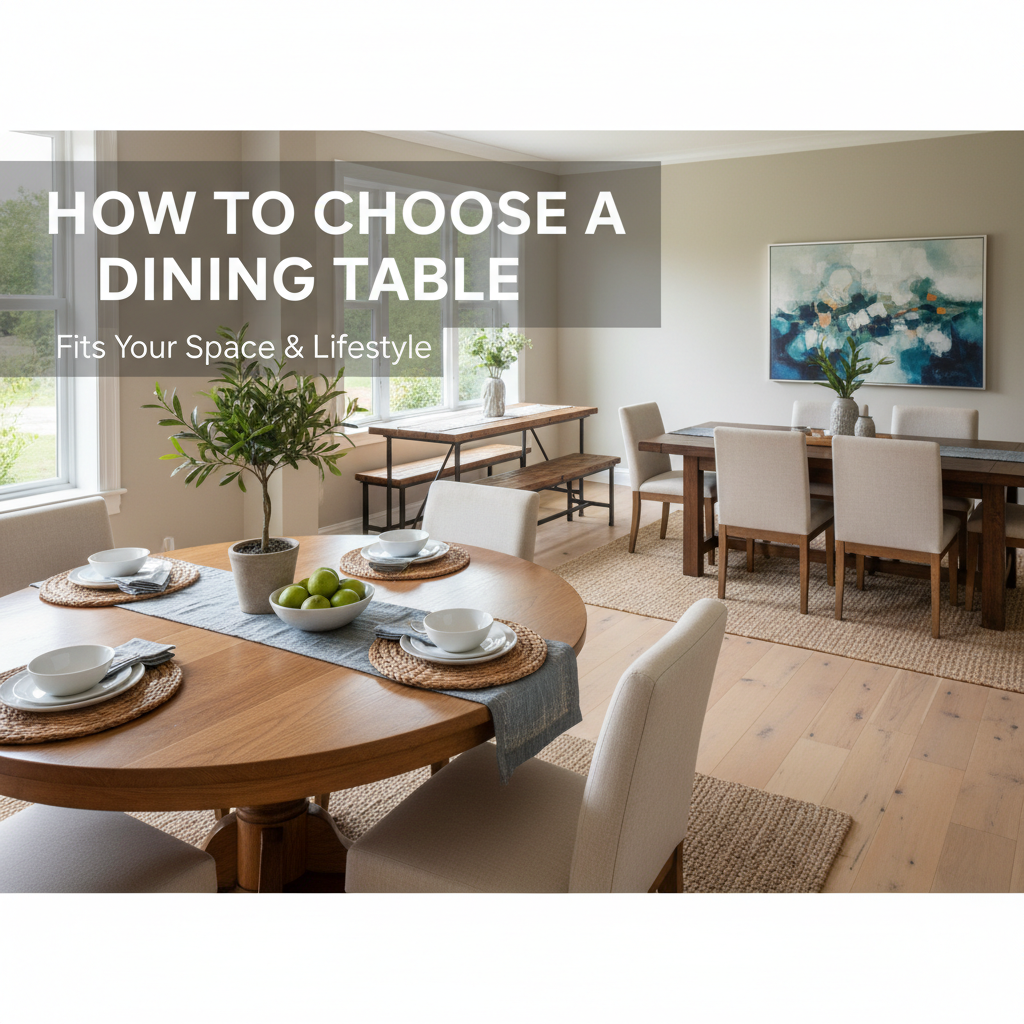
How to Choose a Dining Table That Fits Your Space and Lifestyle: 6-Step Guide
Selecting the perfect dining table transforms your dining room from a basic eating area into a functional, stylish centerpiece for family meals and entertaining guests. This comprehensive guide walks you through the complete dining furniture selection process in approximately 2-3 hours, requiring only basic measurement tools and no prior design experience.
Skill Level: Beginner
Time Required: 2-3 hours for research and selection
Expected Outcome: A dining table that accommodates your seating capacity needs, fits your room dimensions, and supports your lifestyle requirements for the next 5-10 years.
Before You Begin: Essential Prerequisites
Required Tools and Information:
- Tape measure (minimum 25-foot length)
- Room measurements including length, width, and any architectural features
- Family size count and typical guest numbers
- Budget range ($200-$5,000+ depending on material selection and quality)
- Photos of your existing dining area layout and furniture collection
- List of lifestyle needs (daily usage patterns, entertaining frequency, special requirements)
According to the American Society of Interior Designers (2024), proper space planning prevents 78% of common dining furniture purchasing mistakes. Before visiting any furniture store, gather accurate measurements and assess your specific requirements.
Step 1: Measure Your Dining Room and Calculate Space Requirements
Accurate room dimensions form the foundation of successful dining table dimensions selection.
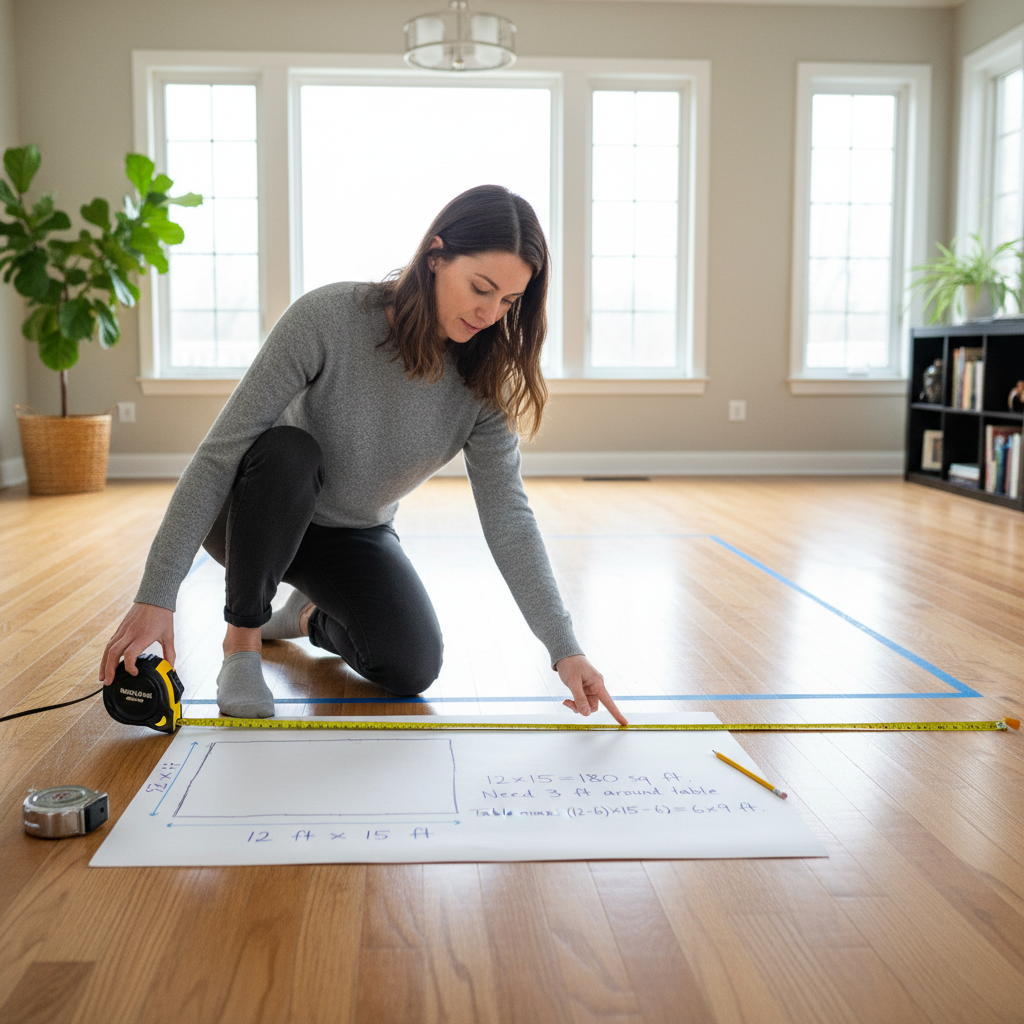
Measure Your Dining Space
- Measure the length and width of your dining room, eat-in kitchen, or breakfast nook in feet and inches.
- Document the location of doors, windows, radiators, and any permanent fixtures.
- Note ceiling height if considering a chandelier or pendant light installation.
- Photograph the space from multiple angles for reference during furniture shopping tips research.
Calculate Required Clearance Space
The National Kitchen and Bath Association (2024) recommends minimum clearance measurements:
- Chair clearance: 36 inches from table edge to wall or furniture for comfortable seating and standing
- Walking space: 48 inches for primary traffic flow areas and circulation path needs
- Wheelchair access: 60 inches turning radius for accessibility needs compliance
- Buffet/sideboard clearance: 24 inches minimum for movement area when serving
For a small apartment or studio apartment, reduce clearance to 30 inches minimum, accepting some restriction in traffic flow.
Apply the Table Size Formula
Room length – 72 inches (6 feet clearance total) = Maximum table length
Room width – 72 inches (6 feet clearance total) = Maximum table width
Example: A 12×14 foot dining room accommodates a maximum table size of 66 inches (5.5 feet) by 96 inches (8 feet).
Step 2: Determine Seating Capacity Based on Family Size
Matching seating capacity to your household size and entertaining habits ensures functional design and aesthetic appeal.
Calculate Daily Seating Needs
According to interior designer recommendations (2024), allocate 24 inches of table perimeter per person for comfortable dining:
- Family of four: 48-60 inch rectangular table or 42-48 inch round table
- Family of six: 72-84 inch rectangular table or 54-60 inch round table
- Family of eight: 96-108 inch rectangular table or 60-72 inch round table
- Family of ten: 120+ inch rectangular table or two smaller tables
Plan for Entertaining Guests
If hosting dinner parties or holiday meals occurs monthly or more, add 2-4 seats to your baseline requirement. An extendable table or drop-leaf table provides expansion capability without consuming space during daily usage.
Consider Seating Arrangements Options
- Dining chairs only: Traditional approach, requires 24 inches per seat
- Bench seating: Space-saving solutions, accommodates 2-3 people per 48-inch bench
- Mix and match: Combines upholstered chairs at table ends with bench seating on sides
- Counter height dining: Requires 26 inches per person, includes bar-height seating
Step 3: Select the Right Table Shape for Your Space
Table shape options significantly impact room functionality and dining area layout efficiency.
Rectangular Table Selection
A rectangular table suits formal dining room settings and narrow rooms. This versatile furniture choice accommodates 6-12 people depending on size, maximizes seating capacity in rectangular spaces, and fits traditional dining tables and modern dining tables aesthetics.
Best for: Large family tables, formal occasions, and rooms with 3:2 or greater length-to-width ratios.
Round Table Benefits
Round tables optimize conversation flow and work exceptionally well as small space tables. According to space optimization research (2024), round configurations increase perceived openness by 15-20% compared to rectangular alternatives in compact areas.
Best for: Small space dining in apartments, breakfast table use, and casual dining table applications requiring intimate seating arrangements.
Square Table Applications
Square tables provide design cohesion in square rooms and open floor plan dining zones. Standard sizes range from 36 inches (seats 4) to 60 inches (seats 8 with corner crowding).
Best for: Kitchen dining tables, dinette set configurations, and contemporary tables in modern interiors.
Oval Table Advantages
Oval tables combine rectangular table seating capacity with round table traffic flow benefits. This shape works in formal dining tables settings while maintaining accessibility in smaller rooms.
Best for: Traditional dining tables contexts, rooms requiring rounded corners for safety, and spaces benefiting from elongated table proportions.
Step 4: Choose Materials and Finishes for Durability
Material selection directly impacts maintenance requirements, durability, and long-term satisfaction.
Wood Material Options
Solid wood dining tables offer unmatched durability and timeless appeal. Popular choices include:
- Oak: High scratch protection, moderate heat resistance, requires periodic refinishing
- Maple: Excellent stain resistance, dense grain, suits modern dining tables and rustic dining tables
- Walnut: Rich color, premium luxury dining tables material, softer than oak
- Pine: Budget-friendly tables option, lighter weight, more susceptible to dents
- Live edge tables: Natural aesthetic, unique character, requires specialized cleaning requirements
Farmhouse tables typically feature pine or oak construction, while industrial dining tables combine wood with metal frame elements.
Glass Tabletop Characteristics
Glass dining tables provide visual spaciousness and easy surface maintenance. Tempered glass offers safety and heat resistance up to 400°F, but shows fingerprints and requires frequent cleaning.
Glass vs wood dining table comparison: Glass expands perceived space by 25% in small rooms but lacks the warmth and scratch protection of wood (Interior Design Institute, 2024).
Marble Surface Considerations
Marble dining tables deliver luxury aesthetics and natural cooling properties ideal for baking and food preparation. However, marble requires sealing every 6-12 months, shows water resistance challenges with acidic liquids, and represents a significant investment in luxury dining tables categories.
Metal Frame and Composite Options
Metal dining tables excel in industrial and contemporary settings. Steel and aluminum bases provide stability, while composite materials like quartz offer marble aesthetics with superior stain resistance and lower maintenance requirements.
For comprehensive material comparison shopping, visit a Furniture Store Indianapolis location to examine finish durability firsthand and consult with design specialists.
Step 5: Consider Functional Features and Storage Capacity
Functional design features extend versatility and maximize return on your budget considerations investment.
Extendable Table Mechanisms
Choosing an extendable dining table solves the challenge of balancing everyday use with entertaining space needs:
- Butterfly leaf: Self-storing extension, adds 12-24 inches, smooth operation
- Removable leaves: 18-24 inch extensions, requires storage space, traditional mechanism
- Pull-apart design: Contemporary tables feature, reveals hidden leaf, seats 2-4 additional guests
According to furniture placement studies (2024), extendable tables increase functional utility by 40% for households entertaining monthly or more.
Drop-Leaf Table Solutions
A drop-leaf table offers maximum compact solution benefits for studio apartment and small space dining applications. Folding design sides collapse to 10-12 inches, expanding to full size when needed.
Multifunctional Furniture Integration
Multifunctional furniture pieces combine dining with workspace or storage:
- Tables with drawers: Storage capacity for linens, flatware, or office supplies
- Convertible table designs: Adjust from coffee table to dining height
- Nesting tables: Separate for larger seating capacity, compact when stacked
Step 6: Evaluate Style and Design Cohesion
Coordinating pieces ensure your dining table enhances overall dining decor rather than creating visual discord.
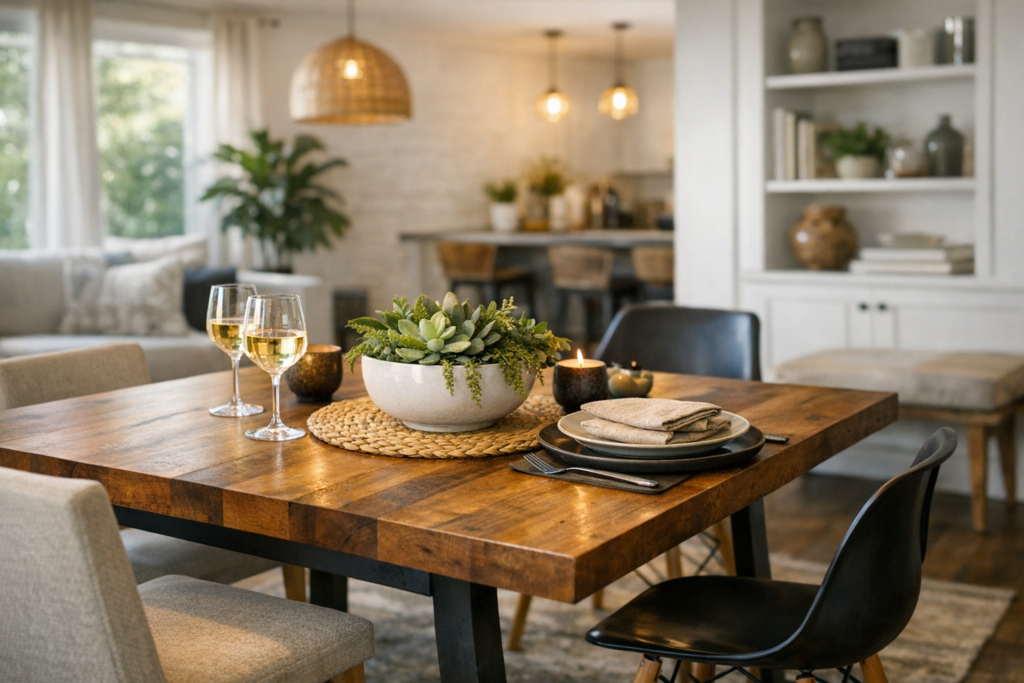
Match Existing Interior Design Elements
Your table selection should complement:
- Existing furniture collection finishes and materials
- Architectural details (molding, flooring, cabinetry)
- Color palette and area rug patterns
- Lighting fixtures including chandelier or pendant light designs
Popular Style Categories
- Farmhouse tables: Distressed finishes, trestle table or X-base tables construction, casual warmth
- Modern dining tables: Clean lines, parsons tables or tulip tables silhouettes, minimal ornamentation
- Traditional dining tables: Carved details, four-leg tables or pedestal base tables, rich wood tones
- Industrial dining tables: Metal and wood combinations, hairpin leg tables, raw finishes
- Rustic dining tables: Natural wood, live edge characteristics, organic textures
Coordinate Chair Selection
Dining chairs should maintain 12 inches between seat and table underside. Consider whether a matching set provides visual unity or if mix and match approaches add character to casual dining environments.
Troubleshooting Common Dining Table Selection Issues
Issue: Table feels too large after delivery
Solution: Verify you maintained 36-inch minimum clearance during measurement. Consider exchanging for a round table to improve traffic flow, or remove one leaf from extendable designs.
Issue: Insufficient seating capacity for family gatherings
Solution: Add bench seating on one or both sides (increases capacity by 20-30%), or supplement with folding chairs stored elsewhere.
Issue: Table material shows damage from daily use with kids
Solution: Choose best material for dining table with kids options: sealed wood with polyurethane finish, quartz composite, or tempered glass. Avoid marble surface and soft woods like pine.
Issue: Table style clashes with open floor plan aesthetic
Solution: Use area rug to define dining zone and create visual separation. Select neutral table finishes that bridge multiple design styles.
Issue: Budget constraints limit options
Solution: Prioritize durable construction over luxury materials. IKEA, Wayfair, and budget dining table buying tips resources offer quality options under $500. Invest in best wood type for dining table construction even if finishing is simpler.
Next Steps: Complete Your Dining Room Setup
After selecting your ideal dining table:
- Choose complementary seating: Order dining chairs within 2 weeks to ensure finish matching and coordinating pieces availability
- Select appropriate lighting: Install chandelier or pendant light centered over table, 30-36 inches above surface for standard height dining
- Define the space: Choose area rug extending 24+ inches beyond table perimeter on all sides
- Plan table styling: Select centerpiece elements that maintain sight lines across table (under 12 inches height)
- Arrange furniture placement: Position table centered in room or aligned with architectural features
- Protect your investment: Use placemats and trivets, clean spills immediately, and apply appropriate sealants based on material type
Major retailers including West Elm, Crate and Barrel, and Pottery Barn offer design consultation services and room planning tools to visualize your selection before purchase.
By following this systematic table buying guide, you ensure your dining table investment delivers functionality, durability, and style satisfaction for years of family meals, formal occasions, and entertaining guests.