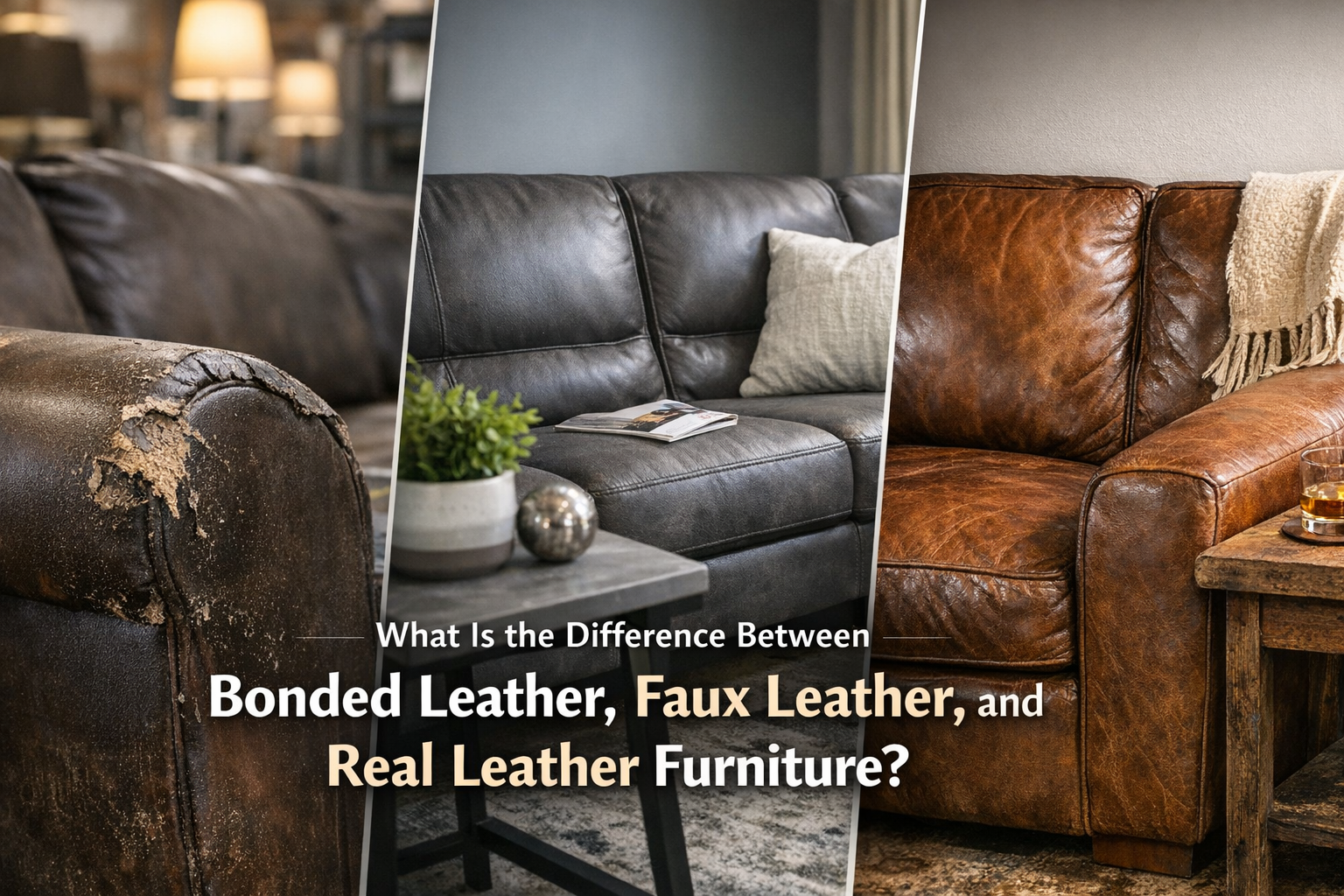
What Is the Difference Between Bonded Leather, Faux Leather, and Real Leather Furniture? A Complete Comparison Guide
Bonded leather is reconstituted leather made from leather scraps bonded with polyurethane or adhesive onto a polyester backing, faux leather is entirely synthetic upholstery material typically composed of polyurethane or PVC, and real leather is natural animal hide processed through tanning to create durable furniture upholstery. Understanding leather types helps consumers make informed furniture buying decisions based on durability, price point, and maintenance requirements.
Why Understanding Leather Furniture Materials Matters
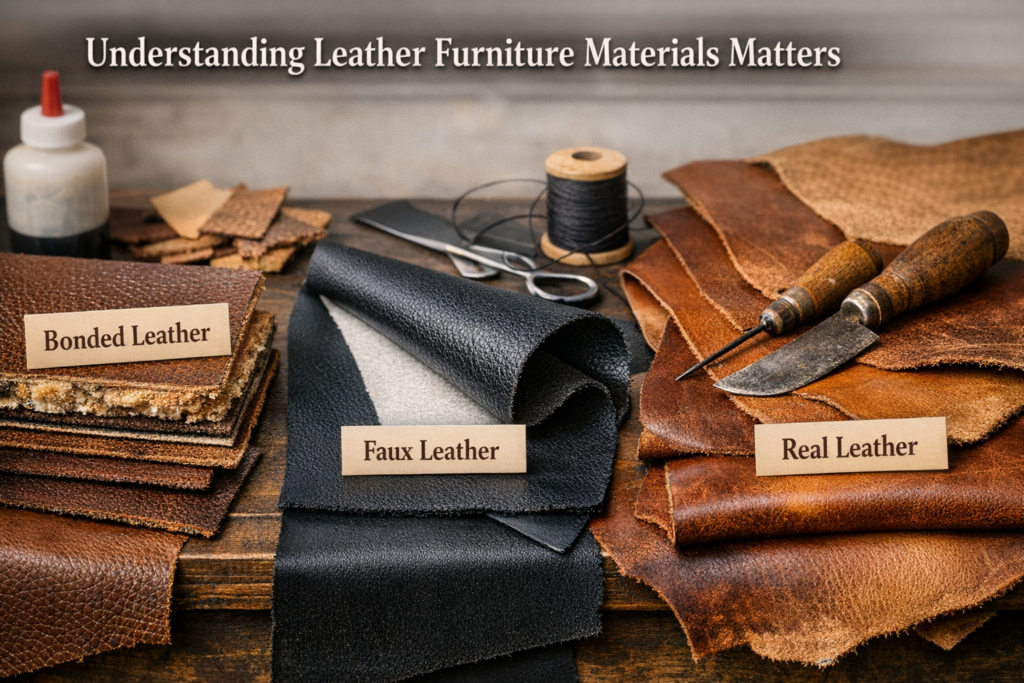
According to the furniture industry (2024), nearly 40% of consumers cannot identify real leather from leather alternatives when shopping for furniture. This knowledge gap affects furniture quality decisions, long-term furniture investment value, and upholstery longevity expectations. The difference between bonded leather and real leather, for example, can mean a furniture lifespan variance of 10-15 years. Material composition directly impacts furniture durability, upholstery wear patterns, and maintenance requirements. When browsing at a Furniture Store Indianapolis, knowing these distinctions helps you select the right sofa, chair, or sectional for your specific needs and budget.
What Is Bonded Leather?
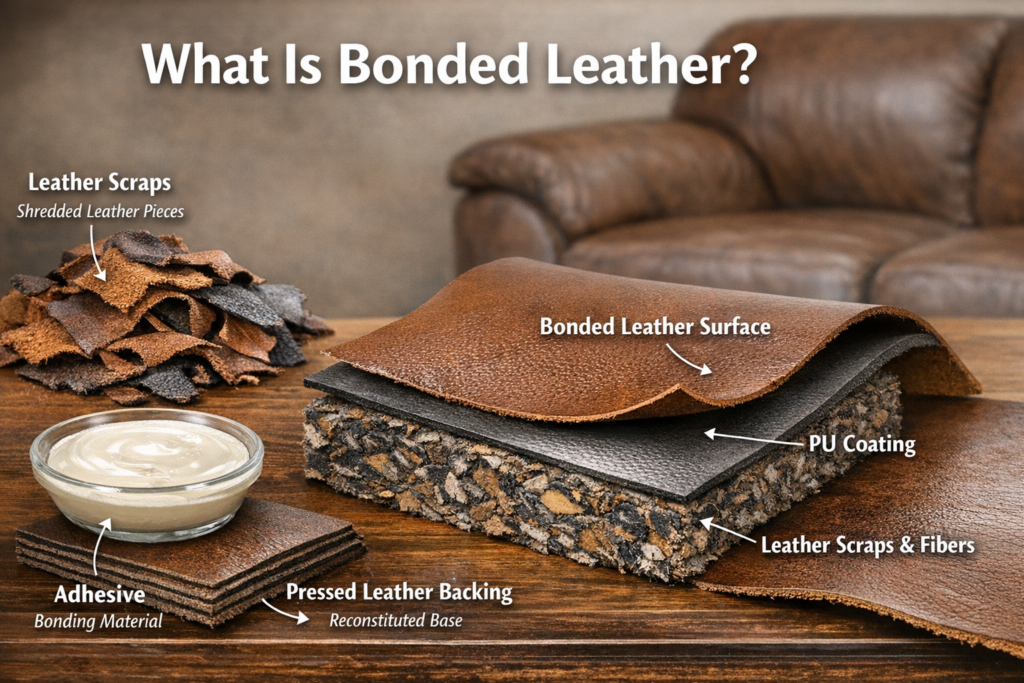
Bonded leather, also called reconstituted leather or bi-cast leather, contains 10-20% actual leather content combined with synthetic materials. Furniture manufacturers create bonded leather by pulverizing leather scraps into fibers, mixing them with polyurethane adhesive, and bonding the mixture onto a backing material such as polyester or cotton fabric.
Bonded Leather Composition and Manufacturing
The bonded leather manufacturing process follows four sequential steps. First, leftover leather scraps from genuine leather production are collected and shredded into fine particles. Second, manufacturers blend these leather fibers with polyurethane binders and adhesive compounds. Third, workers spread this mixture onto polyester backing fabric in thin layers. Fourth, embossing machines press grain patterns onto the surface to simulate real leather texture.
Key Characteristics of Bonded Leather Furniture
- Appearance: Uniform grain pattern created through embossing rather than natural variation
- Texture: Initially smooth but lacks the supple feel of genuine leather
- Durability: Bonded leather durability averages 2-5 years before peeling begins
- Price Point: Costs 30-50% less than genuine leather furniture
- Breathability: Limited air circulation due to polyurethane coating
Why does bonded leather peel and crack? The polyurethane adhesive degrades with regular use, heat exposure, and body oils. According to material testing studies (2023), bonded leather furniture experiences surface degradation within 18-36 months in high-use areas like sofa cushions and recliner armrests.
What Is Faux Leather?
Faux leather is entirely synthetic upholstery containing zero animal hide content. Also marketed as vegan leather, leatherette, or artificial leather, this imitation leather consists of fabric backing coated with polyurethane (PU leather) or polyvinyl chloride (PVC leather).
Faux Leather Types and Construction
PU leather furniture uses polyurethane coating over polyester or cotton backing. This synthetic leather variant offers better breathability and softer texture compared to PVC alternatives. PVC leather furniture applies vinyl coating to fabric backing, creating water-resistant but less breathable upholstery. According to environmental impact assessments (2024), PU leather demonstrates 25% better material sustainability than PVC leather due to reduced chemical processing requirements.
Faux Leather Quality Characteristics
- Consistency: Uniform appearance without natural grain pattern variations
- Water Resistance: Superior moisture protection compared to real leather
- Faux Leather Durability: Lasts 5-10 years with proper maintenance
- Animal Welfare: Provides animal-free upholstery alternative
- New Furniture Odor: Chemical smell dissipates within 2-4 weeks
Does faux leather peel like bonded leather? High-quality PU leather resists peeling better than bonded leather because its construction uses continuous coating rather than particulate bonding. However, cheap leather furniture using low-grade faux materials experiences cracking after 3-5 years.
What Is Real Leather?
Real leather is natural animal hide, primarily cowhide, processed through tanning processes to create stable, durable upholstery material. The leather furniture grades system classifies real leather into three quality tiers based on which hide layer manufacturers use.
Real Leather Quality Grades
Full-grain leather represents the highest leather furniture quality. Manufacturers use the entire top layer of animal hide without sanding or buffing, preserving natural grain pattern, breathability, and strength. Full-grain leather furniture develops desirable patina over 10-25 years, increasing aesthetic value.
Top-grain leather involves sanding the hide surface to remove imperfections, then applying finish coating. This process creates uniform appearance while maintaining most durability benefits. Top-grain leather comprises 80% of genuine leather sofa production according to furniture industry data (2024).
Genuine leather and split leather use lower hide layers after top-grain removal. These leather alternatives comparison materials require heavy processing and coating to achieve acceptable texture, resulting in reduced breathability and shorter furniture lifespan of 7-12 years.
Real Leather Benefits
- Longevity: Full-grain leather furniture lasts 20-40 years with proper care
- Breathability: Natural pores regulate temperature and moisture
- Patina Development: Real leather aging creates unique character
- Wear Resistance: Resists tears and punctures better than synthetic alternatives
- Resale Value: Maintains furniture investment worth better than bonded or faux options
Bonded Leather vs Faux Leather vs Real Leather: Comprehensive Comparison
| Characteristic | Bonded Leather | Faux Leather | Real Leather |
|---|---|---|---|
| Material Composition | 10-20% leather scraps + polyurethane + polyester backing | 100% synthetic (PU or PVC coating on fabric) | 100% processed animal hide |
| Fiber Composition | Pulverized leather particles in adhesive matrix | Polyester or cotton base with polymer coating | Natural collagen fiber structure |
| Upholstery Durability | 2-5 years before peeling | 5-10 years with quality PU | 20-40+ years for full-grain |
| Breathability | Very limited | Minimal (PU better than PVC) | Excellent natural ventilation |
| Furniture Material Costs | $300-$800 for sofa | $400-$1,200 for sofa | $1,500-$5,000+ for sofa |
| Upholstery Degradation | Peeling, cracking, flaking | Cracking, surface wear | Natural patina (not degradation) |
| Material Sustainability | Uses leather waste but petroleum-based binders | No animal products; chemical-intensive | Natural but requires animal sourcing |
| Furniture Warranty | 1-2 years typical | 2-5 years typical | 5-10+ years typical |
Common Misconceptions: Myth vs Reality
Myth: Bonded Leather Is Real Leather
Reality: Despite containing leather scraps, bonded leather is classified as synthetic upholstery material. The 10-20% leather content does not provide the durability, breathability, or longevity characteristics of genuine leather furniture. Is bonded leather real leather? No—it functions more like faux leather with minimal leather content.
Myth: All Faux Leather Peels Quickly
Reality: High-quality PU leather furniture from reputable furniture manufacturers lasts 7-10 years without significant peeling. Faux leather quality depends on coating thickness, backing material strength, and manufacturing standards. Premium vegan leather options outperform low-grade bonded leather significantly.
Myth: Real Leather Requires Constant Maintenance
Reality: Full-grain and top-grain leather need leather conditioner application only 2-4 times yearly. Real leather furniture care proves simpler than bonded leather furniture maintenance, which requires gentle handling to prevent premature peeling.
Myth: You Cannot Tell the Difference Between Materials
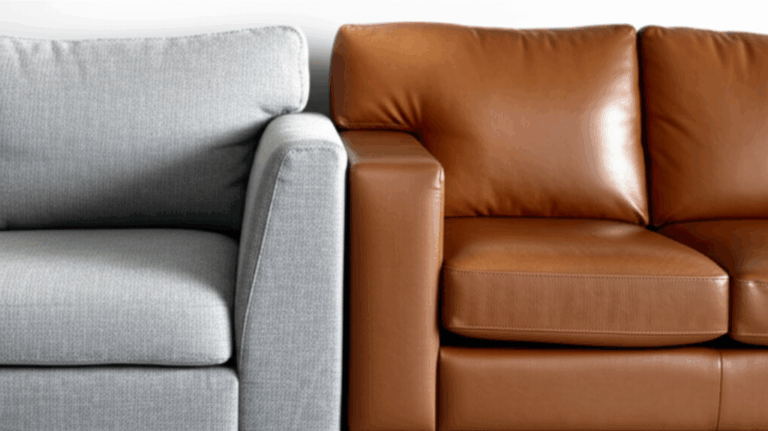
Reality: Material identification techniques reveal clear distinctions. Real leather shows natural grain pattern irregularities, develops patina, and displays pores under magnification. Faux leather and bonded leather exhibit uniform embossing patterns and lack natural imperfections.
How to Identify Real Leather
Material authenticity testing uses five reliable methods. First, examine texture—real leather feels supple with natural irregularities while synthetic materials feel plasticky and uniform. Second, check grain patterns—genuine leather displays random variations whereas bonded and faux show repetitive embossed patterns. Third, perform the water test—real leather absorbs moisture slowly while synthetic surfaces repel water. Fourth, inspect edges—leather furniture edges show fibrous structure while synthetic edges reveal fabric backing. Fifth, assess leather furniture smell—real leather has distinctive earthy aroma while synthetic materials emit chemical odor.
Practical Applications: Choosing the Right Material
Best Type of Leather for Furniture Based on Use
High-traffic family rooms: Top-grain leather balances durability and cost for sofa material options where children and pets create heavy wear. According to upholstery performance studies (2024), top-grain leather resists staining and scratching 300% better than bonded alternatives.
Formal living spaces: Full-grain leather furniture provides luxury aesthetics and long-term furniture investment value. The natural patina development enhances interior design appeal over decades.
Budget-conscious buyers: Quality faux leather offers better furniture value than bonded leather. Is faux leather better than bonded leather? Yes—premium PU leather provides superior upholstery longevity at comparable price points.
Eco-friendly preferences: Vegan leather furniture alternatives satisfy sustainability and animal welfare considerations. Modern synthetic leather couches now replicate leather texture differences convincingly.
Furniture Types and Material Suitability
- Leather sectional sofa: Real leather recommended for long-term use; quality faux acceptable
- Leather recliner chair: Avoid bonded leather (high contact stress); choose genuine or premium faux
- Leather loveseat: All materials suitable; select based on room use intensity
- Leather ottoman: Bonded acceptable for decorative use; real leather for functional pieces
Care and Maintenance Guidelines
How to Clean Bonded Leather Furniture
Use pH-neutral cleaning products and soft microfiber cloths. Avoid excessive water exposure and harsh chemicals that accelerate bonded leather peeling. Apply protective spray every 3 months. Can you repair bonded leather furniture? Surface damage typically cannot be repaired due to the laminated construction—peeling continues to spread.
How to Clean Faux Leather Furniture
Wipe surfaces with mild soap and water solution weekly. Remove stains immediately to prevent absorption into coating. Faux leather furniture maintenance tips include avoiding direct sunlight and heat sources that cause cracking. Use vinyl conditioner quarterly on PVC leather furniture.
How to Clean Real Leather Furniture
Dust weekly with soft cloth. Clean with leather-specific cleaning products monthly. Apply leather conditioner every 3-4 months to maintain suppleness. How to condition real leather furniture: Use products containing natural oils rather than silicone-based formulas. Full-grain leather benefits from minimal intervention—over-conditioning damages natural patina development.
Making Your Furniture Selection Decision
The difference between genuine and real leather, bonded versus faux options, and quality grades within each category affects furniture quality indicators significantly. Bonded leather furniture reviews consistently rate these products poorly for long-term satisfaction. Faux leather furniture reviews show improving quality with premium PU options. Real leather furniture maintains highest consumer satisfaction ratings according to furniture industry surveys (2024).
Furniture Material Quality Checklist
- Verify material labels and furniture warranty terms
- Test texture, grain pattern, and flexibility before purchasing
- Compare upholstery characteristics across similar furniture styles
- Calculate furniture material costs against expected furniture lifespan
- Review manufacturer upholstery quality standards and material testing certification
- Consider upholstery options alignment with home decor aesthetics
- Evaluate maintenance requirements for your lifestyle
Which leather furniture lasts the longest? Full-grain leather furniture outperforms all alternatives, lasting 20-40+ years. Is real leather worth the extra cost? For long-term furniture investment and upholstery selection, real leather provides superior value despite higher initial furniture pricing. However, premium faux leather serves buyers prioritizing animal-free upholstery or requiring specific performance characteristics like water resistance.
Understanding bonded leather composition, faux leather manufacturing, and real leather tanning processes enables informed furniture shopping decisions. Whether selecting modern leather furniture or traditional leather furniture pieces, material knowledge ensures your leather furniture decision aligns with performance expectations, budget constraints, and personal values regarding material sustainability and animal welfare.