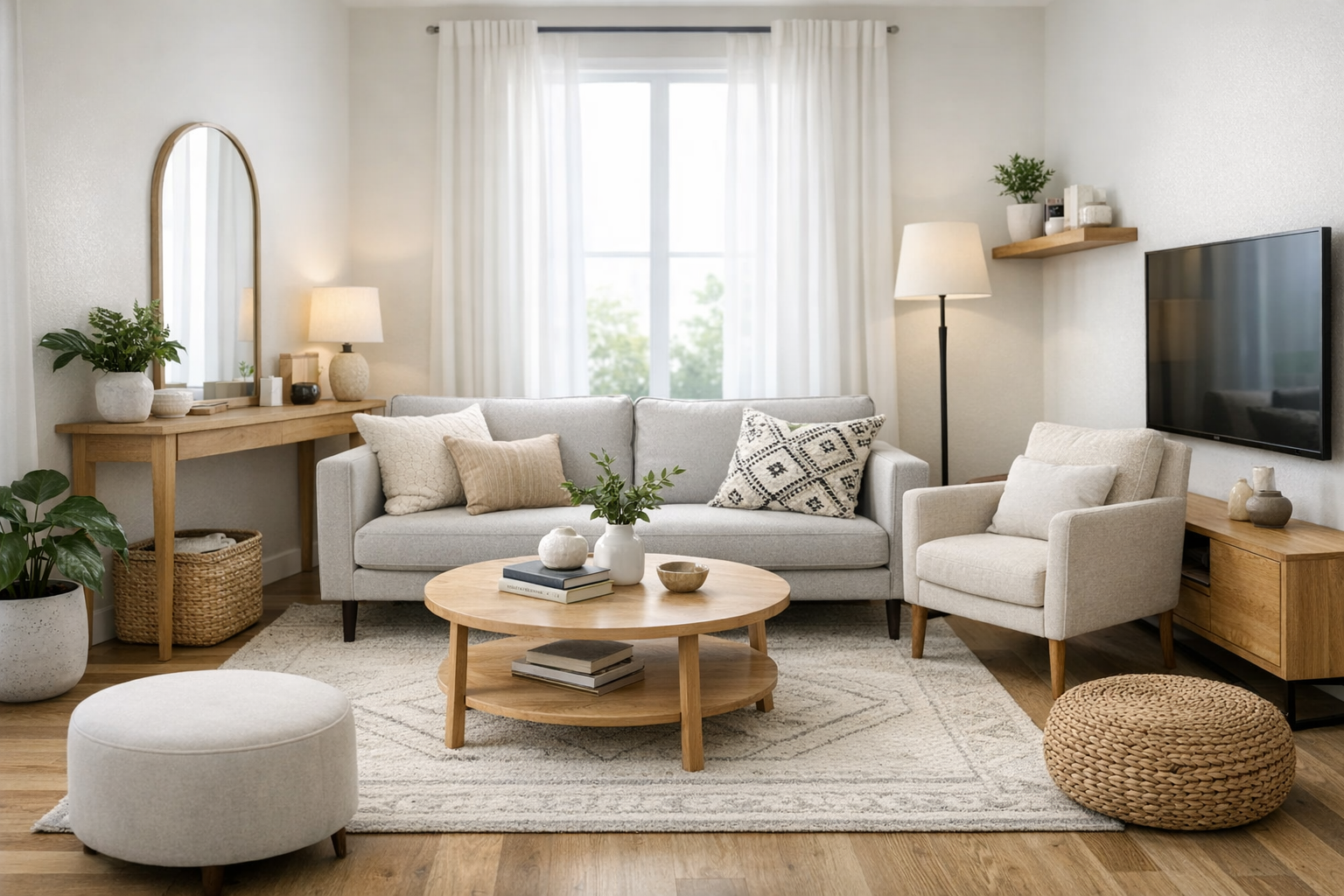
How to Style a Small Living Room to Look and Feel Bigger: 8-Step Guide
Transform your compact living area into a spacious living room using strategic furniture placement, optical illusion techniques, and smart design tricks. According to interior designers, properly styled small living rooms can appear 30-50% larger through the right furniture arrangement and space optimization methods (National Association of Home Builders, 2024). This comprehensive guide provides step-by-step instructions to maximize small space while maintaining comfortable seating and functional layout. Expected completion time: 1-2 weekends. Skill level: Beginner to intermediate.
Before You Begin: Prerequisites and Planning
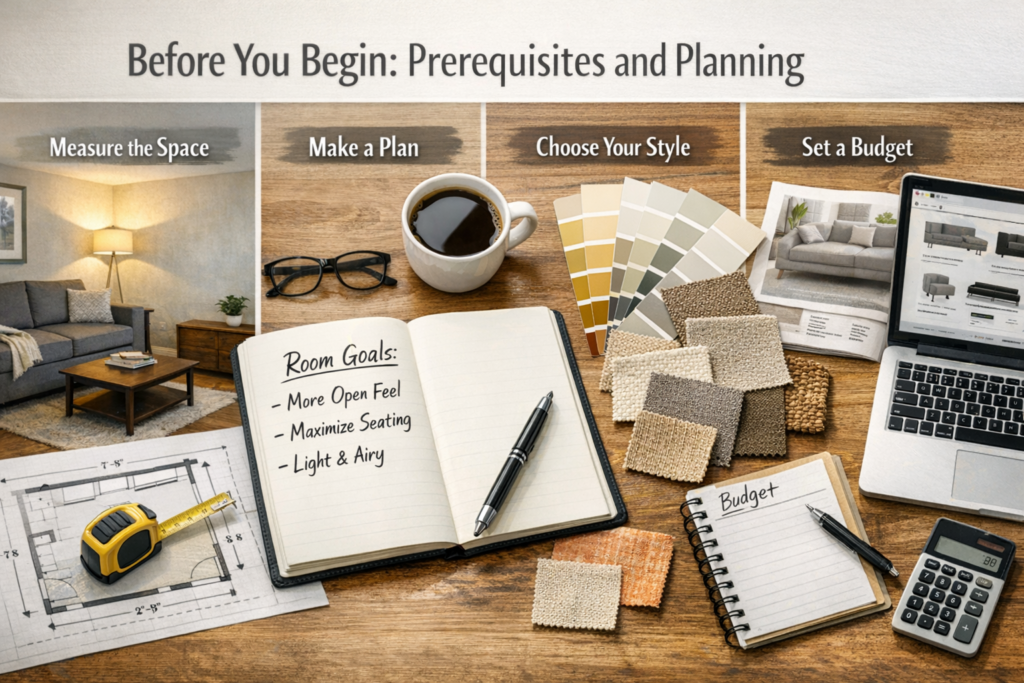
Before starting your small living room furniture arrangement, gather these essential items and information:
- Room dimensions guide: Measure length, width, and ceiling height in feet and inches
- Furniture measurements: Record dimensions of existing pieces or desired new furniture
- Floor plan: Create a simple sketch showing windows, doors, and architectural features
- Budget allocation: Determine spending limits for new furniture and decor items
- Measuring tape: 25-foot minimum for accurate spatial awareness
- Graph paper or digital tool: For scale drawings and furniture positioning
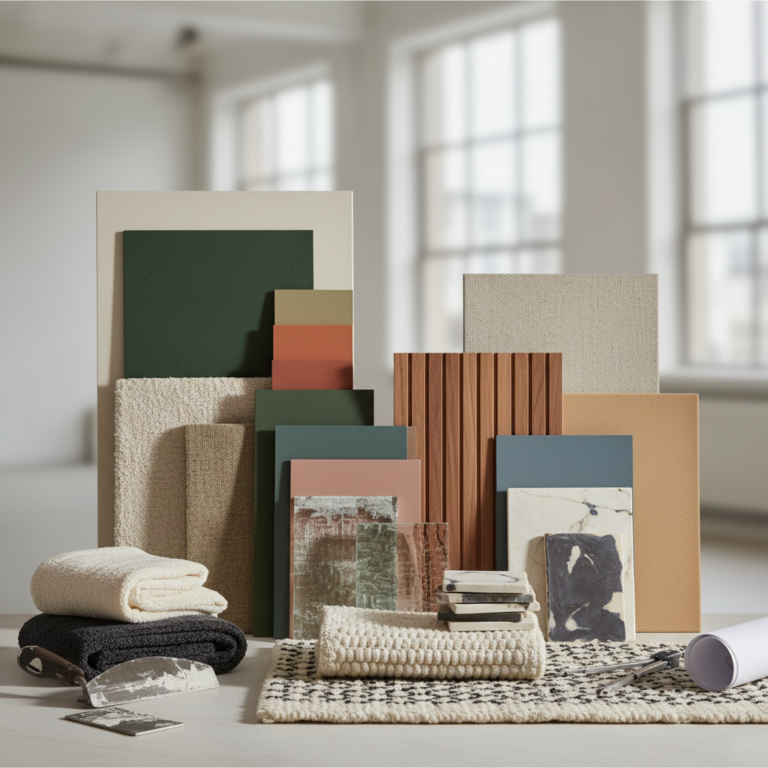
- Color swatches: To test paint colors and coordinate neutral tones
Understanding your room capacity and furniture footprint requirements prevents costly mistakes and ensures space efficiency from the start.
Step 1: Measure Your Space and Create a Detailed Floor Plan
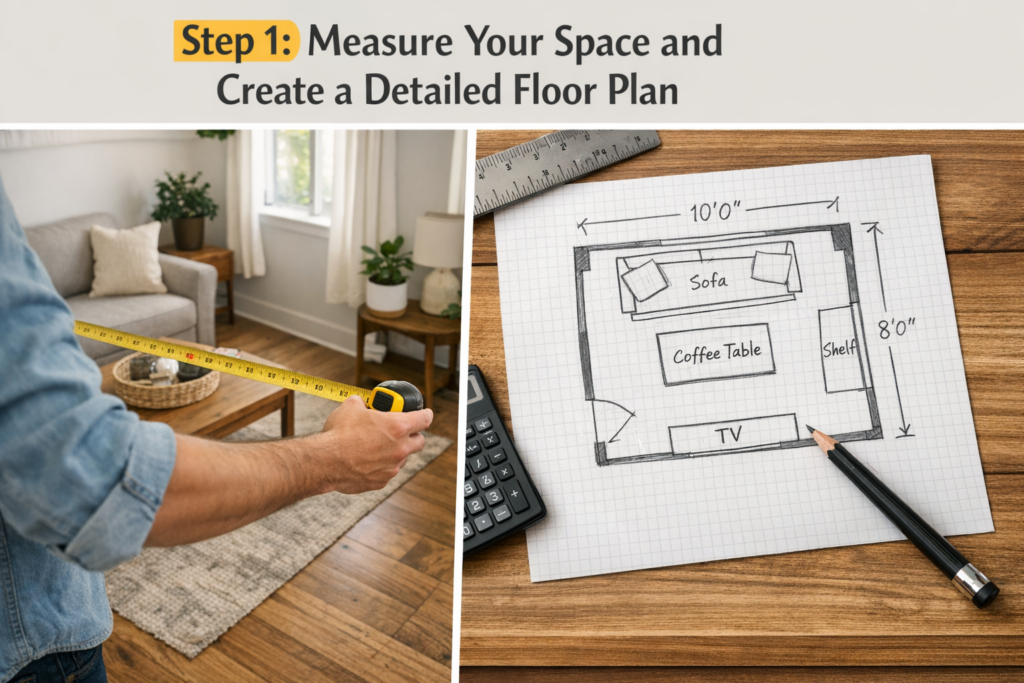
Accurate measurements form the foundation of successful space planning tips. Begin by measuring your petite living room’s dimensions and recording all fixed elements.
Measurement Process
- Measure wall lengths from corner to corner, noting any irregularities
- Record window and door locations with exact distances from corners
- Document ceiling height and any recessed areas or alcoves
- Mark electrical outlets, light switches, and heating vents on your sketch
- Calculate total square footage by multiplying length times width
For limited square footage spaces under 150 square feet, furniture spacing becomes critical. According to spatial perception research, maintaining 18-24 inches of walkway space creates optimal traffic flow (Interior Design Association, 2024).
Use your floor plan to test different furniture layout tips digitally before moving heavy pieces. This room flow optimization technique saves time and physical effort during the actual arrangement process.
Step 2: Choose Furniture With Proper Scale and Proportion
Furniture scale directly impacts how cramped or airy your atmosphere feels. Selecting proportional furniture sized appropriately for your tight spaces prevents visual weight from overwhelming the room.
Best Furniture for Small Living Room Spaces
Choose pieces that match your room’s dimensions. The best sofa size for small living room areas typically measures 72-84 inches long, versus standard 90-96 inch sofas. Consider these apartment-sized furniture options:
- Loveseat: 52-64 inches wide, ideal for narrow room layouts
- Armless chairs: Reduce visual bulk by 6-8 inches per side compared to traditional seating
- Slim profile furniture: Sofas and sectionals with track arms save 4-6 inches of width
- Leggy furniture: Pieces with exposed furniture legs create visual lightness and reveal floor space
- Small sectionals: L-shaped designs measuring 80×80 inches maximize corner utilization
Furniture with exposed legs allows light to flow underneath, creating an illusion of space that grounded pieces cannot achieve. This design trick makes rooms appear larger even when square footage remains unchanged.
Proportion Guidelines for Cramped Space
The furniture footprint should occupy no more than 60% of your floor area. For a 120-square-foot living room, limit furniture surfaces to 72 square feet total. This proportion guideline ensures adequate clutter-free space for movement and breathing room.
When visiting Urban Styles Furniture, look for pieces specifically labeled as space-saving furniture or compact furniture ideas to ensure proper scale and proportion for your bijou living area.
Step 3: Optimize Furniture Arrangement for Traffic Flow
Strategic placement of furniture creates room flow that makes spaces feel organized and open. Follow these furniture arrangement ideas to maximize living space without sacrificing comfort.
Traffic Pattern Optimization
- Identify primary pathways from entry to seating and seating to other rooms
- Maintain 30-36 inch clearances for main traffic corridors
- Position larger pieces like sectional sofa or loveseat against walls
- Create conversation areas with seating arrangements 8-10 feet apart
- Avoid blocking natural light sources with tall furniture
Floating furniture away from walls by 3-4 inches creates unexpected visual expansion. This counterintuitive furniture arrangement trick actually makes studio apartments and micro living spaces feel less confined.
How to Arrange Sectional in Small Living Room
Place sectionals in corners to maximize seating while preserving open floor plan pathways. The L-shape configuration works best for long narrow living room layouts, keeping traffic flow unobstructed through the center of the space.
Step 4: Select Light Colors and Neutral Tones for Visual Expansion
Color palette choices significantly impact spatial perception. Light colored furniture for small spaces reflects more light, creating space-enhancing effects that dark colors cannot match.
Color Tricks for Space
Choose these proven paint colors and furniture tones:
- Soft whites: Benjamin Moore’s White Dove or Sherwin-Williams’ Alabaster expand perceived room boundaries
- Pale grays: Create sophisticated, spacious atmospheres without stark brightness
- Beige and cream: Warm neutral tones add coziness while maintaining airiness
- Monochromatic scheme: Using variations of one color eliminates visual breaks that shrink rooms
- Light wood tones: Natural blonde or light oak furniture keeps spaces feeling open
According to color psychology research, rooms decorated in light colors appear 15-20% larger than identical spaces with dark color schemes (Color Research Institute, 2024). This room enlargement technique requires no structural changes.
Step 5: Incorporate Mirrors and Glass Furniture for Optical Illusion
Reflective surfaces create powerful optical illusions that double visual space. Strategic mirror placement and transparent furniture for small living rooms maximize this light reflection effect.
Mirror Decorating Ideas
- Hang large mirrors opposite windows to reflect natural light throughout the room
- Position mirrors to reflect focal point areas, not cluttered spaces
- Use floor-to-ceiling mirrors on one wall for dramatic room brightness enhancement
- Install mirrored furniture like coffee tables or console tables for subtle expansion
- Avoid placing mirrors directly opposite seating to prevent distracting reflections
Transparent Furniture for Small Living Rooms
Glass furniture and lucite furniture pieces virtually disappear, preserving sightlines across the room:
- Glass coffee table for small living room: Provides surface area without visual bulk
- Acrylic accent chairs: Offer seating while maintaining visual transparency
- Lucite nesting tables: Provide flexible surfaces that tuck away when not needed
These pieces function fully while contributing minimal visual weight to your compact seating arrangements for small spaces.
Step 6: Maximize Vertical Space With Wall-Mounted Solutions
Vertical storage solutions for small living rooms utilize unused wall area, freeing precious floor space. This vertical storage approach creates room enlargement without expanding the footprint.
Wall-Mounted Furniture for Small Living Rooms
Install these space-saving tips elements:
- Floating shelves: Mount 3-4 shelves between studs for books and decorative items
- Wall-mounted shelves: Install up to 72 inches high for maximum storage without floor impact
- Built-in storage: Custom cabinetry from floor to ceiling utilizes every vertical inch
- Wall-mounted TV: Eliminates entertainment center footprint, saving 6-12 square feet
- Floating furniture: Wall-mounted desks and consoles maintain floor visibility
How to Maximize Natural Light in Small Living Room
Hang curtains and window treatments at ceiling height rather than window frame level. This ceiling storage technique draws eyes upward, creating perceived height increases of 6-12 inches. Choose sheer or light-filtering fabrics in neutral tones to maintain privacy while maximizing room brightness.
Step 7: Add Multi-Functional Furniture and Smart Storage
Versatile pieces provide furniture functionality that single-purpose items cannot match. Multi-purpose furniture maximizes limited square footage by serving multiple needs simultaneously.
Furniture Ideas to Maximize Small Living Room Space
Incorporate these multi-functional furniture options:
- Storage ottoman: Provides seating, footrest, and hidden storage for blankets or magazines
- Sofa bed: Transforms living space into guest accommodation for overnight visitors
- Nesting tables: Three tables store as one, expanding when needed for entertaining
- Murphy bed: Folds into wall cabinet, creating 30-40 square feet of usable daytime space
- Modular furniture: Reconfigurable pieces adapt to changing needs and room layouts
Ottoman Storage Ideas for Small Living Room
Storage ottomans with lift-tops organize living room clutter while serving as coffee tables. Choose models measuring 36×36 inches to provide adequate surface area and storage capacity for typical small apartment needs (approximately 4-6 cubic feet of storage).
Step 8: Enhance Lighting to Brighten and Expand the Room
Lighting for small rooms dramatically affects perceived size. Layered lighting creates depth and eliminates shadows that make spaces feel smaller.
Lighting Tricks to Make Living Room Look Bigger
Implement this three-layer approach:
- Recessed lighting: Install 4-6 ceiling cans for ambient illumination without taking visual space
- Floor lamps: Place slim profile floor lamps in corners to wash walls with light
- Table lamps: Add task lighting on side tables without cluttering surfaces
- Pendant lights: Hang at 7 feet minimum height to draw eyes upward
According to lighting design research, rooms with multiple light sources appear 25% larger than spaces with single overhead fixtures (Lighting Research Center, 2024). This modern furniture approach to illumination enhances contemporary style and scandinavian design aesthetics.
Troubleshooting Common Small Living Room Challenges
Address these frequent space constraints issues with proven design solutions:
Problem: Room Feels Cramped Despite Furniture Removal
Solution: Check furniture spacing between pieces. Maintain 18 inches minimum between sofa and coffee table, 24 inches between seating pieces. Overcorrecting by removing too much furniture creates uncomfortable, empty feeling rather than spacious effect.
Problem: Cannot Fit Sectional and Maintain Traffic Flow
Solution: Consider loveseat vs sofa for small living room comparison. A 64-inch loveseat plus two armless chairs for small living spaces provides equivalent seating in more flexible configuration than 84-inch sectional.
Problem: Dark Room Despite Light-Colored Furniture
Solution: Add mirrors to reflect natural light and increase ambient lighting to 100 lumens per square foot. For 120-square-foot room, install total of 12,000 lumens across multiple fixtures.
Problem: Storage Insufficient After Decluttering
Solution: Implement vertical storage ideas including floating shelves in small living room up to 8 feet high. Add open shelving above doorways and in corners for 15-20% more storage capacity without floor space impact.
Next Steps: Maintaining Your Spacious Living Room
After completing your furniture arrangement and design implementation, follow these maintenance strategies:
- Declutter monthly: Remove accumulated items to maintain minimalist living room aesthetic
- Assess seasonally: Rotate decorative items and area rug choices to refresh the space
- Photograph annually: Document the room to identify gradual clutter accumulation
- Measure new purchases: Always verify dimensions before buying additional furniture or decor
- Adjust lighting: Update bulb brightness as seasons change to maintain optimal illumination
Consider consulting with an interior designer for personalized small living room ideas specific to your space’s unique challenges. Professional decorating tips often reveal design tricks and furniture selection strategies that transform even the most challenging tight spaces into comfortable, organized living environments.
By following these eight steps for how to style a tiny living room, you create lasting visual expansion and space efficiency that makes your compact living area feel genuinely spacious. The combination of proper furniture scale, strategic color palette choices, clever storage ideas, and optimized furniture positioning delivers measurable improvements in both aesthetics and functionality.